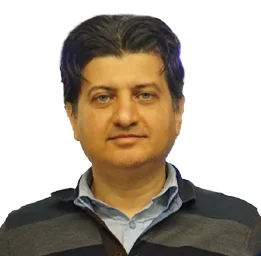
Keynote Speaker:
Digital Twins & XR for Translational Healthcare: From Simulation to Clinical Impact
Dr. Şenol Pişkin
Istinye University, Türkiye
Short Bio
Dr. Şenol Pişkin is Professor and PI of the ISU XR Lab at Istinye University, Istanbul. His research spans translational healthcare technologies, extended reality (XR), digital twins, computational modelling, and AI-driven clinical image analysis. He leads multidisciplinary projects in collaboration with hospitals and clinical specialists to translate simulation and XR tools into clinical workflows and decision support
Abstract of the speech
Healthcare is entering an era where rich data streams, physics-based simulation, and immersive interaction converge to create patient-specific digital twins. In this keynote I will outline a practical roadmap for combining digital-twin models, XR-enabled visualization, and machine learning to accelerate diagnosis, surgical planning, and rehabilitation. I will present case studies from cardiovascular and neurorehabilitation domains that demonstrate how optimization and data-science methods (parameter estimation, model personalization, and predictive analytics) reduce uncertainty, improve intervention planning, and enable remote, clinician-in-the-loop workflows. Finally, I will discuss translational challenges — data governance, clinical validation, and integration with hospital systems — and propose opportunities where optimization and industrial engineering approaches can speed adoption and ensure robust, ethical deployment.
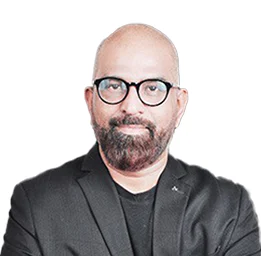
Keynote Speaker:
The Future of Work with AI: Building Human–AI Collaboration Skills
Dr. AbdulQuddus Mohammed
Assistant Professor in Business, Higher Colleges of Technology, UAE
Short Bio
Dr. AbdulQuddus Mohammed is a globally recognized educator, author, and thought leader with over 20 years of experience transforming education and leadership development across the GCC and beyond. Currently serving as Assistant Professor at the Higher Colleges of Technology (HCT), UAE, he is dedicated to empowering Generation Z with the mental codes to thrive in the AI-driven future.
A dynamic keynote speaker and certified expert in HR and leadership, Dr. Mohammed has delivered impactful sessions at Expo 2020, SHRM, UAE University, FAHR, and other global forums. His signature themes—AI for Leadership, Future of Work, Digital Fluency, Entrepreneurial Mindset, and Sustainable Leadership—bridge academia with industry realities.
He is the author of the upcoming book “Thrive AI: Codes for Generation Z to Survive in the AI Age”, a practical guide on leading in a disruptive world. His work integrates AI, HR analytics, and competency-based education to prepare students and professionals for meaningful impact in the Fourth Industrial Revolution.
Dr. Mohammed holds a DBA from ESC Clermont Business School (France), Ph.D. in HR Management, and is a Fellow of CIPD, CMI, HEA, and SHRM-CP certified. His career is marked by numerous accolades including the ACBSP Teaching Excellence Award (2024), Sheikh Mansour Best HR Research Award (2020), and Queen Effat Excellence in Teaching Award (2014).
Driven by the belief that “AI can process data, but it is the human spirit that shapes the future,” Dr. Mohammed continues to inspire young minds to lead with creativity, ethics, and resilience.
Abstract of the Speech
By 2030, the future of work will be defined not by static job titles but by adaptable skills that enable people to collaborate effectively with AI based agentic intelligent systems. The World Economic Forum (2025) projects that 60% of core skills required for the job market will change by 2030, with this global labor market experiencing both disruption and opportunity: 92 million jobs displaced and 170 million created, a net gain of 78 million roles, which no one knows. Yet the scale of change is daunting: 59% of workers will require retraining within just five years. Industry is already responding—78% of firms report AI adoption in at least one business function (McKinsey, 2025), and PwC (2025) finds that skill requirements in AI-exposed jobs are evolving 66% faster than in non-exposed roles.
Emerging skill demands cluster in three domains. Technical skills such as AI, big data, cybersecurity, and digital literacy are accelerating in demand. Human skills—critical thinking, adaptability, resilience, and creativity—remain enduring and essential. At the same time, ethical competencies—governance, fairness, inclusion, and human agency—are gaining prominence as AI reshapes decision-making and work processes.
For higher education, the implications are profound. Research suggests that up to 60% of curricula risk misalignment with labor market needs, while static degree models cannot keep pace with rapid change. Faculty themselves require retraining to integrate AI into pedagogy and assessment. To remain relevant, universities must shift from degree-centric models to skills-first, adaptive learning ecosystems. This includes modular, stackable micro-credentials; AI-integrated, work-based projects; and continuous learning platforms supported by AI tutors and simulators. Equally urgent are embedding AI ethics and AI governance training (UNESCO, 2025), fostering academia–industry partnerships for skills forecasting and internships, and investing in faculty development and institutional AI governance.
This keynote will provide a blueprint for universities to transition into dynamic ecosystems of lifelong learning, equipping graduates not only with technical fluency but also with the capacity to collaborate with AI responsibly, creatively, and inclusively.
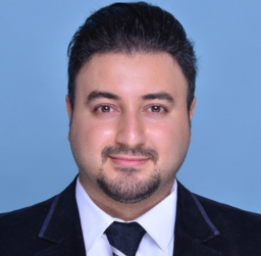
Keynote Speaker:
Towards Waste Management 5.0
Dr. Erfan Babaee Tirkolaee
Istinye University, Turkey
Short Bio:
Dr. Erfan Babaee Tirkolaee obtained a BSc. (2012) and MSc. (2014) in Industrial Engineering from Isfahan University of Technology, Iran. Then, he received a Ph.D. degree (2019) in Industrial Engineering from Mazandaran University of Science and Technology, Iran. Dr. Erfan Babaee Tirkolaee is currently an Associate Professor in the Department of Industrial Engineering at Istinye University in Istanbul, Turkey. Meanwhile, he worked as a Quality Assurance expert in various automotive industries in Iran and completed different relevant training courses, including ISO 9001:2015 and IATF 16949:2016.
He has published more than 170 papers in high-quality journals, including IEEE Transactions on Fuzzy Systems, Expert Systems with Applications, Waste Management, Journal of Cleaner Production, Computers & Industrial Engineering, and Annals of Operations Research. He has been serving as a chair, organizing committee member, as well as a keynote speaker in several prestigious international conferences. Moreover, he is a reviewer in many reputed WoS/Scopus journals and has been recognized as a Top Peer Reviewer in 2 of the Essential Science Indicators research areas by Clarivate WoS. Dr. Erfan Babaee Tirkolaee is currently an Editor in different prestigious WoS/Scopus journals, such as IEEE Transactions of Fuzzy Systems (IEEE), Artificial Intelligence Review (Springer), Facta Universitatis, Series: Mechanical Engineering (University of Niš), and PLOS One (PLOS). He has also been serving on the guest editorial board in several journals, like as Annals of Operations Research (Springer) and Engineering Applications of Artificial Intelligence (Elsevier). Dr. Erfan Babaee Tirkolaee has been featured among the “World’s Top 2% Researchers/Scientists in 2021 – 2024” list identified by Elsevier BV, Stanford University.
Abstract of the Speech:
Efficient Waste Management (WM) is vital for environmental protection, public health, and resource conservation, especially as global waste generation is projected to reach 2.59 billion tons by 2030 and 3.4 billion tons by 2050. A well-designed Waste Management System (WMS) ensures the systematic collection, transportation, processing, and treatment of waste while minimizing ecological and human impacts. Rapid industrial and social growth has intensified resource consumption and amplified waste generation, prompting the need for comprehensive optimization approaches that reduce waste, maximize recycling and reuse, and ensure safe disposal. Recent advancements in digitalization and Artificial Intelligence have transformed industries under the Industry 4.0 (I4.0) paradigm; however, its limitations regarding social fairness, environmental protection, and resilience have accelerated the emergence of Industry 5.0 (I5.0). Integrating human-centricity, sustainability, and resilience, I5.0 offers promising opportunities for next-generation WMSs. Moreover, its strong synergy with Circular Economy (CE) principles (i.e., refuse, reduce, reuse, repurpose, and recycle) enables smarter, greener, and more adaptable solutions. Leveraging AI, IoT, and robotics, WM5.0 fosters efficient resource utilization, encourages end-of-life-focused product design, and enhances sustainable waste practices across the entire lifecycle.